Skip to content
AC GarlandGarland, TexasCall (469) 804-6158

Guide

What North Texas heat does to an air conditioner

Garland's cooling season is long and hot, with humid nights that keep the equipment working after sundown. The National Weather Service numbers for DFW Airport show why.

Normal daily highs at DFW Airport

These are the 1991 to 2020 normals published by the NWS office in Fort Worth. June through September average highs of 88°F or more, and July and August both sit close to 96°F.

Bar chart of normal daily high temperature at DFW Airport by month, 1991 to 202090°F566169768492969689786758JanFebMarAprMayJunJulAugSepOctNovDec
Normal daily high, °F, DFW Airport, 1991 to 2020. Gold bars are months at or above 90°F. Source: NWS Fort Worth.

Other numbers from the same table

DFW Airport is the official climate station for the area; Garland sits east of it, but the pattern is the same.

100°F days
About 20 a year on average, nearly all in July and August.
Muggy nights
The average July dew point is about 71°F, so the coil has a lot of moisture to pull from the air.
Cooling versus heating
Normal cooling degree days (2,825) outnumber heating degree days (2,218), a measure of how much more work goes to cooling.
Freezing nights
About 29 a year, enough that the furnace still matters.

The parts that wear fastest

Long run times and frequent starts put most of the stress on the outdoor unit. Capacitors weaken with heat. Contactors pit from thousands of starts. Fan motors run in direct sun on a metal cabinet. Inside, the condensate drain carries water for months, which is why drains clog by late summer.

An attic adds its own heat. Ducts and the coil cabinet sit in a space far hotter than the rooms below, so any leak in the ductwork pulls attic air into the system.
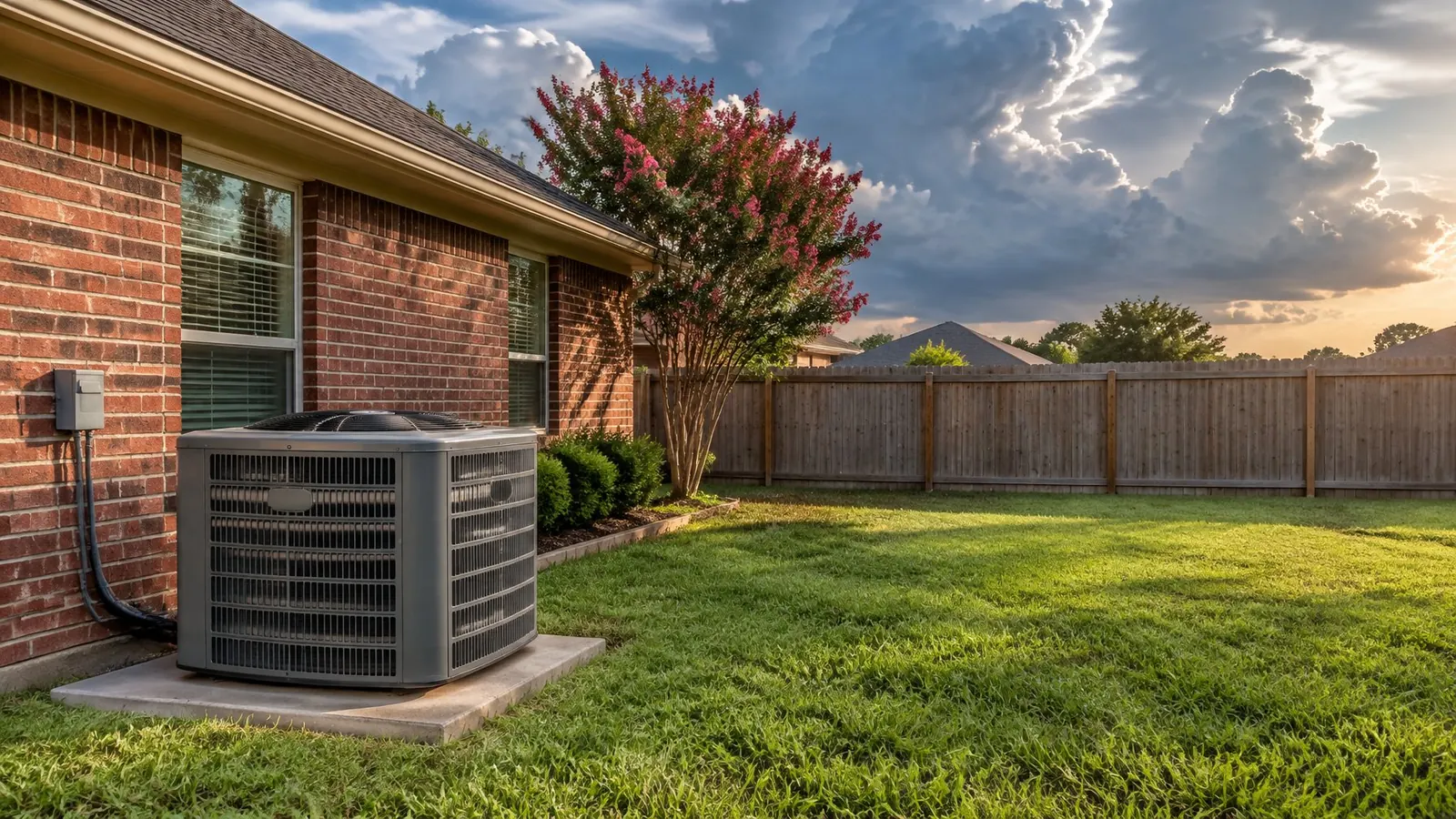
Outdoor air conditioning condenser on a concrete pad beside a red-brick house, with a crape myrtle and a wood fence

What helps

A clean outdoor coil and a fresh filter keep pressures and airflow where the maker intended. Shade near the condenser is fine if air can still move around it. A spring tune-up catches weak capacitors before the 100-degree stretch.

See the tune-up page for what a visit should include.

Talk it over with an independent HVAC contractor

Say what the equipment is doing and where it sits in the house. The contractor on the call can tell you what a visit would involve and whether the work needs a city permit.

Call (469) 804-6158